 At a time when most major economies are wrestling
with recessionary pressures, Bharat continues to stand out as a beacon of resilience
and growth, firmly holding its place among the fastest-growing large economies of the
world. At a time when most major economies are wrestling
with recessionary pressures, Bharat continues to stand out as a beacon of resilience
and growth, firmly holding its place among the fastest-growing large economies of the
world.
While the blistering pace of the previous fiscal has tempered, the momentum
remains strong enough to keep global UPS manufacturers deeply invested. The industry
posted a commendable 7.7% growth in FY 2024–25, reflecting its inherent
strength despite global volatility.
The Government`s Atmanirbhar Bharat mission has transformed the economic
landscape, attracting significant investments and driving ambitious infrastructure
projects. Strategic initiatives in semiconductors, silicon cells, green energy, and next-
generation technologies such as artificial intelligence, robotics, and advanced data
processing are reshaping Bharat`s industrial base.
With increased capital inflows into defense, telecommunications, and
manufacturing, the power electronics sector is expected to expand over 8.1 % in FY
2025–26.
Yet, actual mid-year results differed from earlier Softdisk projections due to
delayed government procurements and frequent state-level elections. This makes
initiatives like “One Nation, One Poll” crucial, as they can help avoid
recurrent disruptions caused by the Model Code of Conduct. Even so, by November
2025, the industry was still advancing at a healthy 7.51% growth rate, proof of
Bharat`s economic durability.
As European markets falter and global GDP slows, Bharat is gaining even greater
relevance in international supply chains. U.S. corporations are reducing dependence on
China, with companies like Foxconn producing the latest iPhones at its Chennai plant
for domestic and export markets. Bold oil purchase strategies and the gradual
repatriation of gold reserves, once mortgaged in the early 1990s, further solidify
Bharat`s economic standing. A World Bank report for Q3 2025 reaffirms its position as
the world`s fastest-growing large economy.
Beyond the metros, Tier III and IV towns are becoming growth engines, with
defense corridors, renewable energy projects, data centers, and startups driving
expansion. Several Indian startups now achieve unicorn status almost every week,
underscoring the vibrancy of the entrepreneurial ecosystem. To maintain this
momentum, particularly for the UPS industry, greater focus on domestic sourcing is
essential. With 67% of the defense procurement budget earmarked for local players,
the call to be “Vocal for Local” has never been more critical.
Softdisk believes that the Power Electronic Industry is bond to grow.
SURVEY
HIGHLIGHTS
Total Industry Revenue – FY
2024-25
The Indian Power Electronic industry is estimated to have shipped products
worth approximately INR 8,424.53 crore to end-users during FY 2024-25, reflecting an
increment of about INR 602.31 crore over the previous fiscal.
A significant portion of this increase estimated at over INR 250 crore is attributed
to OEM and secondary sales. Given that the market is highly fragmented, with more
than 150 unorganized players, determining the exact sales to end-users remains
challenging. It is important to note that these secondary sales primarily consist of static
inverter units supplied to OEMs and do not include batteries or direct end-user
sales.
Industry Performance: FY 2023-24 vs
FY 2024-25
Revenue Growth:
The industry`s revenue expanded by INR 602.31 crore, reaching nearly
INR 8,424.53 crore, which translates to a year-on-year growth of 7.70%. This trend
highlights an increasingly price-sensitive customer base and a competitive
landscape where larger players continue to consolidate their market position, while
smaller companies often struggle to sustain margins.
Volume Growth:
On the volume side, industry sales witnessed an estimated 8.15% growth, which is
marginally higher than the previous year`s growth by about 0.25%.
Key Market Insights
The data suggests shrinking profit margins for smaller manufacturers. While
companies with a strong focus on operational efficiency and bottom-line performance
continue to thrive, a few players faced order fulfilment challenges due to component
shortages, influenced by ongoing geopolitical and supply chain disruptions.
This is a clear indicator of shrinking margins for smaller players. Companies going
for bottom line doing great with only a few exceptions while some companies not able
to complete order due to lack of components due to geopolitical situation arising due
various factors.
Three Phase Online UPS sales has picked up. Online sales account for nearly
93.5%. Contributing a significant increase in revenue. There is nearly 84% increase in
sales of 5kVA to 60kVA UPSs, more growth in 3 phase UPS is visible. However sales of
Line Interactive UPS remains limited to select few companies who are doing good
business.
Offline & line interactive UPS show a drop in growth in 9% in volume terms
and not have not been a significant contributor in revenue terms, it increasingly
becoming a low margin a high volume game. In revenue terms they contributed
nearly 1.00% to the Total Industry revenue.
Rest of revenue comes for UPS companies manufacturing SPCU, Solar
inverter, small servo stabilizer, Energy storage solutions etc. which accounts to nearly
5.5 percent total industry revenue.
This does not include Inverter sold under the tag of Home UPS.
It was observed that medium & regional players making profits are leaning
towards Solar Power Control Units (SPCU) which comes with more profits as compared
to conventional UPSs. Remaining being sale of Servos and change of batteries not
under maintenance and TPM contracts.
Exports on rise as compared to previous year. Many leading once aim at exports.

The Epoch of 2024–25 and the Road Beyond
Geopolitical Challenges and Resilient Growth
The fiscal year 2024–2025, though challenging in multiple respects,
nevertheless reflected resilience, recording an overall year-on-year growth of 7.70%,
with revenues rising by INR 602.31 crore. Considering the volatile geo-political
landscape across the globe, such performance stands commendable.
Revenue Dynamics and Market Structure
Industry revenues ascended to INR 8,424.53 crore, of which over INR 200 crore
stemmed from secondary transactions, comprising OEM-to-OEM engagements and
OEM-to-trader sales in Tier-3 cities. Given the highly fragmented structure of the sector
with more than 150 unorganised players—it remains difficult to ascertain exact
end-user sales. Importantly, this secondary segment excludes batteries and pertains
solely to static inverters for B2B trade rather than direct consumer deployment.
Domestic Potential versus Foreign Dependencies
Despite headwinds, the industry fared better than many anticipated. The Make in
India initiative has played a pivotal role, creating a fertile ground for UPS vendors. Yet,
the shadow of Chinese linkages persists, as many UPS units sold in India retain foreign
connections. Encouragingly, several companies have embarked upon domestic
assembly, laying the foundation for an indigenous ecosystem that augurs well for the
future.
The Populism Trap
At Softdisk, we believe it is imperative that consumers remain economically
discerning, choosing systems of appropriate quality and reliability. The ethos of Vocal
for Local must be taken earnestly. Unfortunately, political populism in the form of
electoral freebies has distorted this prudence. What began as an isolated practice has
now proliferated, compelling even ruling parties to emulate such tactics. It is
regrettable that citizens, lured by short-term giveaways, often elect governments that
falter on the developmental front.
A Call for Electoral Reform
Softdisk asserts that the Election Commission of India must institute stringent
directives, disallowing political parties from publicising such enticements in manifestos
and campaigns. Severe penalties should be mandated against parties that exploit
populist promises. Only by curbing this tendency can holistic and sustainable national
development be achieved.
Impact of Electoral Codes on Procurement
The imposition of electoral codes of conduct, both for parliamentary elections and
concurrent state polls, further curtailed orders from state departments, causing a
notable dip in government procurement. With several states poised for elections in the
coming months, a surge in such orders is unlikely. It is therefore imperative for
enterprises to recalibrate and seek growth in alternative verticals.
Projections for 2025–26
Nevertheless, we remain confident that the industry`s collective revenues, which
stood at INR 8,424.53 crore in FY 2024–2025, will be surpassed in the
forthcoming fiscal. Projections indicate that the UPS industry is poised for a growth
trajectory of nearly 8.8% in 2025–2026.
Consolidation, Acquisitions, and Market Behaviour
A handful of enterprises underperformed owing to internal challenges; however,
overall trends remain favourable. Customers are increasingly discerning in both price
and quality considerations. Consolidation is also underway, exemplified by Amber`s
acquisition of Powerone. Firms specialising in customised deployments, once facing
order shortfalls, have begun securing new contracts as the startup ecosystem continues
to expand.
Volume Growth and Market Shifts
Industry sales recorded an estimated growth of over 8.1%, reversing the previous
year`s contraction of 0.58% and marking an improvement of 2.1%.
Three-Phase Momentum
The momentum in three-phase online UPS solutions has been remarkable. Online
UPS now constitutes nearly 93.5% of the market, contributing significantly to revenue
expansion. Particularly, sales of units in the 5kVA to 60kVA range surged by nearly
84%, underscoring the increasing adoption of mid-range three-phase systems.
Conversely, single-phase UPS sales remain concentrated among a few successful
enterprises.
Decline of Offline and Line-Interactive Models
In contrast, offline and line-interactive UPS segments witnessed a 9% decline in
volume. With limited contribution to revenues approximately 1% of the industry total
these categories are increasingly characterized by high-volume yet low-margin
dynamics.
Expanding Horizons: Modular and Allied Products
Of the total revenue of INR 8,424.53 crore, UPS sales accounted for 94.5%. The
remaining 5.5% derived from allied product lines such as SPCUs, solar inverters, small
servo stabilizers, and energy storage solutions. Modular UPS systems are gaining
notable traction, particularly within the ITES sector, with many Indian manufacturers
strategically entering this space. The adoption of SPCUs is further enabling firms to
sustain viability in a competitive landscape.
Uninterrupted India: How Power Fuels Progress
As India races ahead to secure its place as the world`s fastest-growing economy,
Softdisk set out to understand how deeply this growth has shaped the industry and the
pace at which it is evolving. What emerged is a story of ambition, resilience, and an
unrelenting demand for power.
Across the nation, projects are mushrooming at unprecedented speed. The spirit of
Atma Nirbhar Bharat has set the tone, as start-ups rise in astonishing numbers over
1,500 crossing into unicorn territory in 2024–25 alone. This explosion of
entrepreneurial energy has created a parallel surge in the demand for pure,
uninterrupted power, turning expansion plans into an urgent necessity. The
government, for its part, has responded with sweeping measures: liberalizing FDI,
channeling massive investments into infrastructure and defense corridors, and driving
the Make in India initiative to deliver results that are now unmistakably visible.

Nowhere is this momentum felt more strongly than in India`s
technology backbone. The expansion of IT and ITES giants, the rise of hyperscale data
centers, the dominance of big data, and India`s unparalleled position as the world`s
largest UPI user base have all combined to give telecom a decisive lift. Tower
infrastructure is climbing skyward at record pace, supported by India`s homegrown 5G
ecosystem and the NAVIK, proved so potent in OPERATION SINDOOR positioning
system already deployed for strategic defense applications. For the UPS industry, this
has meant renewed vitality in the mid-segment. Small data centers with requirements
up to 30 kVA and medium installations ranging from 40 kVA to 120 kVA are steadily
gaining traction, painting a robust picture for the year ahead.
At the same time, a quiet yet powerful shift is underway. Solar energy is no longer
just an alternative it is becoming central to the industry`s future. Several players have
gone beyond conventional systems to design and install grid-sharing solar UPS with
hybrid features, setting the stage for a more resilient and sustainable energy
landscape.
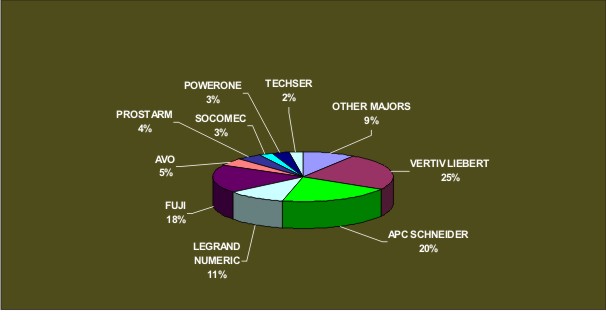
The competitive terrain, too, is clearly defined. Vertiv-Liebert remains firmly at the
helm with a commanding 25% share, followed by APC-Schneider at 20% and Fuji
Electric at 18%. Legrand Numeric holds 11%, while ProstarM, AVO, Socomec,
Powerone, and Techser together form the mid-tier, contributing between 2% and 5%
each. The balance rests with a diverse group of players including homegrown stalwarts
like Hykon and Uniline who continue to hold their ground in this fiercely competitive
market.
What Softdisk`s findings ultimately reveal is not just the state of the UPS industry,
but the pulse of a nation determined to power its growth story one project, one
innovation, and one breakthrough at a time.
SD ESTIMATE: Softdisk now predicts a growth nearly 7.70 %
percent that the total industry revenue will touch INR 8424.53 crore approx by
March, 2025. We talked to Industry Captains trying to know what the industry leaders
thought of the future ahead. Many had little or no doubt to what Softdisk has predicted
earlier and continued to have faith on Softdisk analysis, more so the decision making
ability it has become major tool to the clients.
Softdisk remains committed for transparent reporting, in-depth analysis & as
always throwing up forecast & estimates which you can Rely Upon For
Sure.
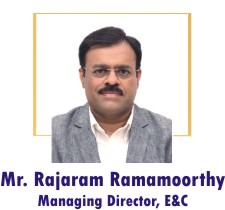 According to Mr. Rajaram Ramamoorthy, Managing
Director of Electronics and Controls Power Systems Pvt. Ltd. headquartered in
Bangalore, the growth trajectory of the UPS-cum-Solar industry has been steadily
ascending over the past few years. He observes that this upward movement has
been shaped by continuous advancements in digitalization, automation across
industries, surging economic activity, and the ever-expanding demand for internet-
related services and e-commerce. The hybrid work culture that emerged in the
aftermath of COVID-19 has further cemented the necessity of uninterrupted power at
the domestic level, turning residential UPS systems into a near-basic requirement. Mr.
Ramamoorthy adds that the Government’s emphasis on indigenous
development and manufacturing in key sectors, under the banner of Atma Nirbhar
Bharat, has infused a renewed optimism among technologically adept UPS companies,
allowing them to compete successfully against the influx of low-cost imports. According to Mr. Rajaram Ramamoorthy, Managing
Director of Electronics and Controls Power Systems Pvt. Ltd. headquartered in
Bangalore, the growth trajectory of the UPS-cum-Solar industry has been steadily
ascending over the past few years. He observes that this upward movement has
been shaped by continuous advancements in digitalization, automation across
industries, surging economic activity, and the ever-expanding demand for internet-
related services and e-commerce. The hybrid work culture that emerged in the
aftermath of COVID-19 has further cemented the necessity of uninterrupted power at
the domestic level, turning residential UPS systems into a near-basic requirement. Mr.
Ramamoorthy adds that the Government’s emphasis on indigenous
development and manufacturing in key sectors, under the banner of Atma Nirbhar
Bharat, has infused a renewed optimism among technologically adept UPS companies,
allowing them to compete successfully against the influx of low-cost imports.
He laments that no enterprise today can operate without guaranteed power
continuity. Almost every vertical be it digital payments, citizen-centric automation, OTT
streaming, metro rail expansion, or smart city infrastructure depends on reliable
backup power to function seamlessly. This is where the UPS-cum-Solar segment has
become critical, evolving from a traditional emergency power backup into an active
enabler of India’s digital-first economy.
Technological progress has played a decisive role in this evolution. High-efficiency
power conversion technologies, lithium-ion battery adoption with advanced battery
management systems, and modular, scalable UPS architectures have collectively
enhanced reliability and flexibility. Furthermore, IoT-enabled predictive maintenance
and AI-driven analytics have made it possible to monitor systems remotely, reduce
downtime, and optimize performance. The convergence of UPS systems with renewable
energy, particularly solarhas also positioned the industry at the center of India’s
energy transition, aligning with the nation’s sustainability goals.
Despite this impressive growth story, the industry faces challenges that must be
addressed. The high upfront cost of indigenous advanced systems, the complexity of
integrating diverse power sources, and the lingering dependence on imported electronic
components and lithium cells are pressing concerns. Harmonizing outdated
infrastructure with cutting-edge UPS and solar solutions often demands costly retrofits.
Moreover, regulatory frameworks sometimes lag behind technological progress, leading
to compliance ambiguities, especially in areas like e-waste management and pollution
control. Mr. Ramamoorthy emphasizes that a streamlined, single-window clearance
process, clearer compliance norms, and industry-friendly policy support will be critical
for sustaining momentum.
Looking ahead, he foresees robust growth over the next three years, driven by
India’s rapid data center expansion, proliferation of cloud services, and rising
ESG commitments. Integrated UPS-cum-Solar solutions are expected to see
accelerated adoption as businesses seek energy efficiency, decarbonization, and
operational resilience in mission-critical sectors such as healthcare, telecom,
manufacturing, defence, and space. According to him, this confluence of technological
ingenuity, sustainability imperatives, and favorable policies will propel the industry into
a future marked by reliability, scalability, and self-reliance.
Speaking on the celebration of two decades of UPS-cum-Solar Day,
Mr. Ramamoorthy reflects that the occasion is far more than a ceremonial event; it
is a testament to the perseverance and unity of the industry. Organized unfailingly
during the first week of December every year by Softdisk, the only publication
dedicated exclusively to the UPS sector, the event has evolved into a key platform for
dialogue, networking, and collaborative problem-solving. He notes that such continuity
and dedication led by Dr. Sai Krishnan, whose passion and meticulous planning have
made this event an industry institution are rare and worth emulating.
He further adds that the Softdisk Annual Rankings and SD Awards, now in their
33rd edition, have brought transparency and credibility to the sector. Since the rankings
are based on verified customer feedback, site inspections, and audited data, they serve
as a dependable reference point for customers and an inspiration for manufacturers to
improve their offerings. The recognition not only validates the hard work of UPS
solution providers but also encourages them to innovate, adopt best practices, and
compete on quality rather than price alone. Mr. Ramamoorthy believes that such
initiatives are instrumental in elevating industry standards and driving the collective
mission of making India a hub for world-class power continuity and renewable energy
solutions.
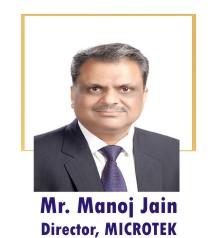 Microtek International Pvt. Ltd., headquartered in
New Delhi, is one of the most respected names in the power electronics industry, with
its Director, Mr. Manoj Jain, reflecting deeply on the transformative growth of the UPS-
cum-Solar sector. He believes the industry has been expanding at a steady and
reasonable pace over the last few years, propelled by two complementary forces, the
rising demand for secure backup solutions for critical applications and the increasing
acceptance of renewable energy through solar, supported by heightened consumer
awareness. He notes that government initiatives, particularly the Prime
Minister’s Surya Ghar Yojana, along with central and state-level subsidies for
rooftop installations, have created a fertile environment for adoption. According to him,
the Surya Ghar Yojana has been especially impactful in encouraging households to
invest in solar rooftops, as it provides direct financial benefits while simultaneously
contributing to India’s sustainability goals. In his words, this scheme has turned
renewable energy into not only an environmental responsibility but also an
economically compelling decision for the common household. Microtek International Pvt. Ltd., headquartered in
New Delhi, is one of the most respected names in the power electronics industry, with
its Director, Mr. Manoj Jain, reflecting deeply on the transformative growth of the UPS-
cum-Solar sector. He believes the industry has been expanding at a steady and
reasonable pace over the last few years, propelled by two complementary forces, the
rising demand for secure backup solutions for critical applications and the increasing
acceptance of renewable energy through solar, supported by heightened consumer
awareness. He notes that government initiatives, particularly the Prime
Minister’s Surya Ghar Yojana, along with central and state-level subsidies for
rooftop installations, have created a fertile environment for adoption. According to him,
the Surya Ghar Yojana has been especially impactful in encouraging households to
invest in solar rooftops, as it provides direct financial benefits while simultaneously
contributing to India’s sustainability goals. In his words, this scheme has turned
renewable energy into not only an environmental responsibility but also an
economically compelling decision for the common household.
Manoj emphasizes that rooftop solar solutions are fast becoming integral to
everyday life, marking a shift in the way Indian consumers view energy. He points out
that several factors have driven this change government subsidy frameworks,
technological advancements in storage, and the market’s transition toward
lithium batteries, which are increasingly replacing conventional lead-acid variants. He
regards this technological leap as transformative, enabling more efficient and reliable
UPS-cum-Solar systems. He further observes that affordability has improved
significantly, allowing even semi-urban and rural households to access solar-based
backup solutions.
Interestingly, Manoj does not see the sector as facing severe challenges. Instead,
he identifies the key innovation ahead as lying in the battery domain, particularly the
accelerated shift from lead-acid to lithium technologies. He notes that demand for
uninterrupted power in smaller towns and semi-urban regions has surged as electricity
access has widened, ensuring that rural India will be among the strongest growth
drivers in the years ahead. Looking forward, he foresees the UPS industry growing at a
CAGR of 10 to 15 percent, while the solar segment, buoyed by government thrust and
consumer preference for reducing electricity bills, could achieve a minimum of 20 to 25
percent growth annually over the next three years. For him, the combined industry is
poised to become an indispensable pillar of India’s energy security, in complete
alignment with the vision of Atma Nirbhar Bharat.
Reflecting on the celebration of two decades of UPS-cum-Solar Day, Manoj regards
it as a proud milestone that symbolizes how far the industry has traveled from merely
introducing solar-backed UPS solutions to making them an integral part of
India’s power ecosystem. To him, it is not only a moment to look back with
pride but also to reaffirm the industry’s commitment to continuous innovation
and future-ready applications. He strongly feels that Softdisk has played a critical role
in this journey. The unbroken continuity of UPS-cum-Solar Day for twenty years, and
the SD Awards for thirty-three consecutive years, stands as testimony to unparalleled
dedication and meticulous execution. He particularly commends the passion and vision
of Dr. Sai Krishnan, describing him as an institution in himself, whose commitment has
elevated these events into benchmarks of credibility.
Manoj further stresses that Softdisk’s rankings and awards have created a
culture of recognition that has significantly enhanced transparency and professionalism
in the industry. He believes they have provided a vital platform for companies to
showcase leadership, encouraged healthy competition, and inspired the pursuit of
excellence across the sector. For consumers and investors alike, these recognitions
have built trust and confidence, ensuring that the industry continues to thrive with
credibility and innovation. In his view, such consistent recognition has not only
celebrated outstanding achievements but has also fostered an environment of
collaboration and growth, which will remain indispensable as the UPS-cum-Solar sector
continues to power India’s sustainable future.
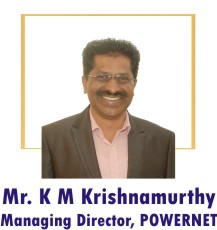 Headquartered in Bangalore, Powernet
Solutions Pvt. Ltd. has carved out a distinct niche in the power electronics sector under
the leadership of its Managing Director, Mr. K. M. Krishnamurthy. He expressed
satisfaction with the company’s performance in the last fiscal, noting that
Powernet recorded nearly 9% growth well above its 2023–24 performance.
Unlike many UPS manufacturers chasing the broad market, Powernet Solutions has
strategically chosen to specialize. The company is a recognized leader in manufacturing
lift logic boards and lift UPS systems, which have seen widespread acceptance not only
in India but also across Southeast Asian markets. Headquartered in Bangalore, Powernet
Solutions Pvt. Ltd. has carved out a distinct niche in the power electronics sector under
the leadership of its Managing Director, Mr. K. M. Krishnamurthy. He expressed
satisfaction with the company’s performance in the last fiscal, noting that
Powernet recorded nearly 9% growth well above its 2023–24 performance.
Unlike many UPS manufacturers chasing the broad market, Powernet Solutions has
strategically chosen to specialize. The company is a recognized leader in manufacturing
lift logic boards and lift UPS systems, which have seen widespread acceptance not only
in India but also across Southeast Asian markets.
Serving as an OEM partner to several globally reputed elevator brands though
bound by non-disclosure agreements the company has built strong credibility in this
niche domain. Beyond elevator solutions, Powernet Solutions also designs and delivers
a range of single-phase and three-phase online UPS systems, catering to diverse power
backup requirements. Mr. Krishnamurthy emphasizes that in the UPS industry, success
lies in identifying and owning a niche. For Powernet, competing is not with the top-tier
global UPS companies, but with those select few manufacturers who supply UPS
systems embedded with advanced lift logic boards. In this specialized space,
competition remains limited, and Powernet has leveraged its expertise to strengthen its
leadership position.
Looking ahead, the company is confident of maintaining its growth momentum,
driven by rising demand for intelligent power backup solutions in urban infrastructure
and elevator-based applications. With continuous investments in R&D and
manufacturing excellence, Powernet Solutions is positioning itself as a trusted partner
in enabling safe, efficient, and uninterrupted elevator operations worldwide.
Reflecting on industry milestones, Mr. Krishnamurthy commended Softdisk for its
unparalleled contribution to the Indian power electronics industry. He remarked that
while many publications have attempted to cover UPS and power electronics, none have
managed to sustain themselves in the Indian market with the same depth, consistency,
and credibility. Over the years, Softdisk has become a unique voice and benchmark for
the industry, fostering recognition for both established and emerging players. For
Powernet Solutions, the acknowledgment and coverage by Softdisk has served as both
validation and motivation. Mr. Krishnamurthy adds that Softdisk has played a crucial
role in educating customers, bridging industry knowledge gaps.
According to Mr. Ram Agrawal, Managing Director of Prostarm Info Systems Ltd.,
based out of Navi Mumbai, the UPS-cum-Solar sector has witnessed a decisive upward
trajectory over the past few years, largely fueled by policy support and increasing
consumer awareness. He recalls that the strong thrust of government initiatives,
particularly under the National Solar Mission, has created an enabling environment by
way of subsidies and regulatory backing, encouraging integration of solar into hybrid
and on-grid systems that ensure not just generation but also reliable backup. Mr.
Agrawal further adds that demand has risen substantially in regions where erratic
power supply had long plagued homes and enterprises, as hybrid solar UPS solutions
have emerged as affordable and dependable alternatives. He cites the phenomenal rise
of rooftop solar as a game-changer, where consumers now view the solar UPS not just
as an emergency substitute but as a mainstream energy provider. He stresses that
hybrid solar systems offering surplus power export to the grid have completely altered
the dynamics of the sector, turning what was once a standalone backup into an
integrated energy solution.
Yet, he laments that the path is not free from obstacles. A lack of consistent policy
frameworks, complex subsidy mechanisms, and land acquisition hurdles continue to
restrain momentum. He also underlines that India’s heavy dependence on
imported solar cells, panels, and inverters has been a persistent impediment, slowing
down the journey towards true Atma Nirbhar Bharat in this critical sector. Financing
difficulties and bureaucratic complexities, he adds, further dampen investor confidence.
Nevertheless, Mr. Agrawal remains optimistic. He highlights how government focus on
manufacturing through Make in India and skill development initiatives has begun to
reshape the sector, steadily reducing import reliance and expanding domestic capacity.
He believes that with rising investor interest, greater technological advancements, and
better consumer awareness of rooftop solar’s economic benefits, the industry
will continue to grow at a healthy pace of around 10–11% annually. Over the
next three years, he foresees the sector evolving into a mature ecosystem, marked by
self-reliance, better financing avenues, and enhanced innovation, thereby cementing its
role as a cornerstone of India’s energy transformation.
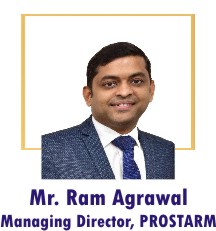 For Mr. Ram Agrawal, the celebration of two decades
of UPS-cum-Solar Day holds deep significance, both for Prostarm and the industry at
large. He views it as a moment of reflection and renewed inspiration, symbolizing how
far the sector has come in its pursuit of sustainability, reliability, and energy
independence. For Prostarm, he observes, it stands as a reminder of the
company’s own journey of growth and innovation over the last two decades,
reinforcing its resolve to pioneer further in this field. For Mr. Ram Agrawal, the celebration of two decades
of UPS-cum-Solar Day holds deep significance, both for Prostarm and the industry at
large. He views it as a moment of reflection and renewed inspiration, symbolizing how
far the sector has come in its pursuit of sustainability, reliability, and energy
independence. For Prostarm, he observes, it stands as a reminder of the
company’s own journey of growth and innovation over the last two decades,
reinforcing its resolve to pioneer further in this field.
He acknowledges that Softdisk has played a pivotal role in shaping the
sector’s identity and credibility. The unbroken tradition of hosting this annual
celebration for twenty years and conferring the SD Awards for thirty-three consecutive
years is, in his words, a testimony to passion, perseverance, and meticulous planning.
He admires the consistency with which Dr. Sai Krishnan has nurtured this institution,
turning it into a beacon of recognition and excellence.
Mr. Agrawal emphasizes that Softdisk’s rankings and awards have not only
provided industry players with visibility but also instilled greater confidence among
consumers and investors. By fostering transparency, benchmarking quality, and
highlighting innovation, the SD Awards have contributed immensely to elevating the
stature of the UPS-cum-Solar sector in India. He concludes that such endeavors remain
indispensable for driving sustained growth, public trust, and the realization of
India’s vision for clean and reliable energy.
Bangalore-based PNS Systems Pvt. Ltd., under the dynamic leadership of Mr.
Sumanth Kumar, President of UMDA and Managing Director of the company, has carved
a distinctive trajectory of resilience and growth despite the turbulence of global
economic headwinds. Mr. Sumanth remarks that in today’s climate, any
growth above 8 percent must be seen not merely as an achievement, but as a
testament to resilience and adaptability. Anchored in the philosophy of innovation and
indigenous excellence, PNS Systems continues to align its efforts with the national
vision of Make in India, designing and manufacturing UPS solutions that embody
reliability, scalability, and sustainability.
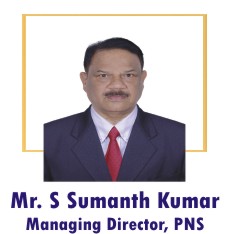 Reflecting on the post-pandemic landscape, Mr.
Sumanth observes that the sector has experienced what he terms a U-shaped recovery.
Domestic consumption has seen a notable resurgence, underscoring the renewed
confidence of Indian consumers. He highlights that customer willingness to invest has
never been in doubt; what remains critical is the industry’s ability to deliver the
right solutions solutions that are tailored, reliable, and future-ready. To fully leverage
this demand, he emphasizes the need for Indian manufacturers to focus on scaling up
capacity and technological depth. Reflecting on the post-pandemic landscape, Mr.
Sumanth observes that the sector has experienced what he terms a U-shaped recovery.
Domestic consumption has seen a notable resurgence, underscoring the renewed
confidence of Indian consumers. He highlights that customer willingness to invest has
never been in doubt; what remains critical is the industry’s ability to deliver the
right solutions solutions that are tailored, reliable, and future-ready. To fully leverage
this demand, he emphasizes the need for Indian manufacturers to focus on scaling up
capacity and technological depth.
Policy support has also provided much-needed momentum. Mr. Sumanth points to
the GST reduction on solar modules and batteries, which has invigorated capital goods
investments while simultaneously reinforcing the government’s push for self-
reliance through Make in India. However, he also draws attention to the flip side of
regulatory reform. The Bureau of Indian Standards (BIS) mandate, while aimed at
ensuring quality, has inadvertently created formidable hurdles, especially for small and
medium enterprises. Compliance costs, delays, and procedural bottlenecks are eroding
competitiveness and making it increasingly difficult for smaller firms to thrive in an
already challenging marketplace.
Looking to the future, Mr. Sumanth asserts that the coming decade will be
decisively shaped by renewable energy adoption. Solar rooftops, once a peripheral
solution, are now redefining the energy landscape of rural and semi-urban India.
Government programs such as the Suryodaya Yojana have significantly expanded
solar’s reach, making it accessible to middle-income households and rural
institutions. PNS Systems is positioning itself at the forefront of this transition by
diversifying its portfolio to include off-grid, hybrid, and string inverter technologies.
These solutions offer flexibility of deployment, enhance reliability, and reduce
dependence on the grid all while aligning with the growing national consciousness
around sustainability.
With the convergence of solar and UPS technologies, the industry is expected to
sustain double-digit growth rates in the years ahead. Mr. Sumanth firmly believes that
Indian manufacturers are now poised to play not only a domestic but also a global role
in the clean energy revolution.
For Mr. Sumanth, the Softdisk Awards represent more than a platform of
recognition they have come to embody a trusted institution, almost akin to a family
member, offering encouragement, validation, and motivation to businesses year after
year. He emphasizes that the industry’s collective progress is not attributable to
any single enterprise but is the result of shared effort across manufacturers,
innovators, policymakers, and enablers, with Softdisk serving as a catalyst that binds
them together. And organising function for two straight decades and 33rd SD Award
Ceremony even during peak covid times speaks of Dr. Sai’s commitment for his
passion.
Softdisk’s influence has been particularly transformative. By bridging the
gap between enterprises and end-users, it has nurtured a culture of transparency
through data-driven rankings, meticulous analysis, and credible market intelligence. For
customers, these benchmarks have served as dependable tools for informed decision-
making, while for manufacturers, they have provided both validation and the impetus
to pursue excellence relentlessly.
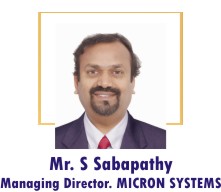 Micron Systems & Control Pvt. Ltd., based
in Bangalore, stands amongst India’s forward-looking companies in the power
electronics and renewable energy domain. Its Managing Director, Mr. S. Sabhapathy,
notes that the past few years have revealed contrasting fortunes for the UPS and solar
sectors. The UPS industry, he explains, has grown significantly, driven by the
rising need for reliable backup solutions across residential and commercial segments.
By contrast, solar adoption has been somewhat sluggish, constrained by aggressive
price wars among competitors and unclear policy frameworks that often discourage
sustained investment. Micron Systems & Control Pvt. Ltd., based
in Bangalore, stands amongst India’s forward-looking companies in the power
electronics and renewable energy domain. Its Managing Director, Mr. S. Sabhapathy,
notes that the past few years have revealed contrasting fortunes for the UPS and solar
sectors. The UPS industry, he explains, has grown significantly, driven by the
rising need for reliable backup solutions across residential and commercial segments.
By contrast, solar adoption has been somewhat sluggish, constrained by aggressive
price wars among competitors and unclear policy frameworks that often discourage
sustained investment.
He points to Karnataka as an example, where new building projects encounter
difficulties in securing power sanctions due to stringent and unclear norms. Moreover,
the state’s provision of free electricity up to 200 units, while socially beneficial,
has reduced the urgency for households to install solar rooftop systems. According to
him, such measures unintentionally slow down the renewable momentum. Mr.
Sabhapathy stresses that clearer policies and better-aligned incentives are essential if
the country is to scale solar adoption at the pace it envisions.
Yet he remains optimistic. The recent reduction in GST from 12% to 5%,
announced by the Hon’ble Prime Minister, is likely to act as a strong catalyst for
the sector over the next three years. He underlines that the integration of UPS with
solar provides a highly dependable, sustainable, and cost-effective energy
solution—an ideal blend for India’s future. For this potential to be
realized, he identifies three priorities: innovations in hybrid UPS-solar technology that
improve efficiency and affordability, streamlined approval processes for new buildings,
and greater consumer awareness of the long-term savings solar energy delivers, even
in areas with subsidized electricity. With such measures, he foresees the combined
UPS-cum-Solar industry sustaining annual growth in the 10–11 percent range,
reinforcing both energy reliability and environmental responsibility.
Reflecting on the industry’s journey, Mr. Sabhapathy describes the
celebration of two decades of UPS-cum-Solar Day and thirty-three consecutive years of
SD Awards as nothing short of historic. To him, these milestones prove that the sector
has not only matured but also built a culture of resilience and recognition. He remarks
with conviction that Softdisk has been the glue of the industry, binding together diverse
stakeholders and offering a common platform where achievements are celebrated,
challenges are debated, and innovations are showcased. Without this unifying force, he
suggests, the sector would not have achieved the same level of cohesion and credibility.
He further emphasizes that the continuity of these events, year after year, is a
testament to the vision and meticulous dedication of Dr. Sai Krishnan, whom he regards
as an institution in himself. The SD Awards, in his view, have acted as a transparent
benchmark of performance, creating healthy competition while inspiring companies to
continuously enhance their quality and innovation. By calling out and rewarding
excellence, they have built consumer trust and industry confidence. Mr. Sabhapathy
concludes that Softdisk, as the glue of the UPS-cum-Solar sector, has ensured that the
industry grows not in isolation, but in unison, charting a credible path toward a cleaner
and more reliable energy future.
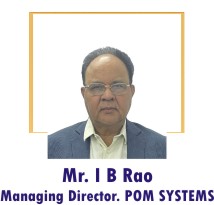 Bangalore-based POM Systems and Services Pvt. Ltd.,
under the dynamic leadership of Mr. I. B. Rao, Managing Director, has been
spearheading the transformation of India’s power electronics industry.
According to him, the sector has now become a critical enabler of industrial
growth, though the challenge of competing with global products and scaling them
worldwide remains significant. With India steadily emerging as one of the
world’s leading economies, a new generation of knowledge-driven customers
has emerged keen to harness reliable and sustainable power. Mr. Rao points out that
India’s ambition to stand shoulder to shoulder with China in manufacturing will
demand far greater investments in infrastructure, factories, and advanced
manufacturing capabilities within the domestic UPS market. Bangalore-based POM Systems and Services Pvt. Ltd.,
under the dynamic leadership of Mr. I. B. Rao, Managing Director, has been
spearheading the transformation of India’s power electronics industry.
According to him, the sector has now become a critical enabler of industrial
growth, though the challenge of competing with global products and scaling them
worldwide remains significant. With India steadily emerging as one of the
world’s leading economies, a new generation of knowledge-driven customers
has emerged keen to harness reliable and sustainable power. Mr. Rao points out that
India’s ambition to stand shoulder to shoulder with China in manufacturing will
demand far greater investments in infrastructure, factories, and advanced
manufacturing capabilities within the domestic UPS market.
He observes that while many Indian UPS companies have been acquired by
multinational corporations, benefitting from large investments and professional
management practices, POM Systems has remained steadfast in its vision. As an Indian
company with over three decades of successful operation, POM continues to deliver true
Make in India products. Through its dedicated team of technocrats, the company has
developed new designs, value-added solutions, and customization capabilities. Notably,
POM has already engineered high-capacity transformer-based IGBT charger UPS
systems, cementing its reputation as a pioneer in the field.
Renewable energy, Mr. Rao stresses, is now central to industrial expansion, and
government subsidies under schemes such as the Suryodaya Yojana will further
accelerate adoption. He projects that the renewable energy division at POM could grow
by nearly 100% annually in the years ahead. The company, already recognized as
India’s largest hybrid SPCU manufacturer, has consolidated its operations in a
four-storied facility that houses manufacturing of single- and three-phase UPS systems,
Battery Energy Storage Systems (BESS), static EV chargers, frequency converters,
grid-tie and hybrid SPCUs, and other specialized equipment.
With innovations such as lithium-ion phosphate battery-based systems and in-built
wall-mount UPS units ranging from 10 KVA to 25 KVA, POM is positioning itself to meet
diverse market needs. Mr. Rao acknowledges that while regulatory approvals can at
times be smooth, they often present significant delays and uncertainties. Nonetheless,
he is confident of sustaining double-digit growth for POM Systems and Services,
strengthening its footprint not only across India but also in international markets.
Reflecting on Softdisk’s role, Mr. Rao notes that POM’s association
with the magazine dates back over two and a half decades. At a time when the sector
was largely unorganized, Softdisk became a credible source of market size evaluation,
industry analysis, and business awareness. He lauds the commitment of the Softdisk
team in investing time to understand niche companies like POM, adding that their role
in data collection, product introduction, and knowledge dissemination has been
instrumental in shaping the industry.
He goes on to describe Softdisk as the very glue of the UPS and solar fraternity.
The uninterrupted celebration of UPS-cum-Solar Day for over two decades including
during pandemic years speaks volumes of the passion and meticulous planning of Dr.
Sai Krishnan and his team. Softdisk’s annual rankings and awards, Mr. Rao
emphasizes, have not only built credibility for Indian companies in a market otherwise
dominated by MNC reports but also created benchmarks of quality, innovation, and
customer satisfaction. For POM Systems, these awards have served as validation of its
long-standing commitment to innovation and Atma Nirbhar Bharat. More importantly,
SD’s annual UPS Day has become a landmark event for the entire industry,
offering a platform for Indian companies to exchange ideas, address challenges, and
collectively shape the future of the UPS-cum-Solar sector.
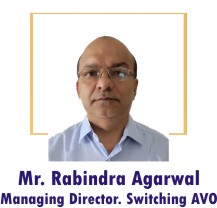 Switching AVO Electro Power Limited,
headquartered in Kolkata, under the leadership of Mr. Rabindra Agarwal, foresees a
growth rate of around 8-9% in the coming fiscal year, a modest drop he attributes to
the time lost during the General Elections. Nonetheless, he emphasizes that AVO
is already fully geared with its in-house manufacturing setup aligned with the Atma
Nirbhar Bharat initiative which gives the company a strategic edge. This capability
enables them to effectively meet the needs of government and banking clients,
industries that value reliability and indigenous sourcing. Switching AVO Electro Power Limited,
headquartered in Kolkata, under the leadership of Mr. Rabindra Agarwal, foresees a
growth rate of around 8-9% in the coming fiscal year, a modest drop he attributes to
the time lost during the General Elections. Nonetheless, he emphasizes that AVO
is already fully geared with its in-house manufacturing setup aligned with the Atma
Nirbhar Bharat initiative which gives the company a strategic edge. This capability
enables them to effectively meet the needs of government and banking clients,
industries that value reliability and indigenous sourcing.
Mr. Agarwal notes that technical teams have been working diligently behind the
scenes, backed strongly by management, to strengthen AVO’s position
especially within the three-phase UPS segment. He expresses confidence in capturing a
larger market share here, buoyed by rising demand from manufacturing, healthcare,
data center, and other sectors where uninterrupted power is imperative. With this
focus, AVO is poised to expand its footprint and deepen its business in the three-phase
arena. He further believes that by enabling power generation for self-consumption,
rooftop installations ease grid stress and lower electricity costs for end users. The
Pradhan Mantri Surya Ghar Yojana, he remarks, has significantly bolstered the sector,
and Switching AVO is no exception in fact, the firm manages over 20 MWp of installed
solar capacity with pride. Furthermore, as solar system costs continue to decline, he
believes that rooftops combined with lithium-battery systems will be a major growth
lever for both the environment and the industry. AVO sees itself as well-positioned to
capitalize on this trend, performing exceedingly well in the deployment of such
integrated clean energy solutions. AVO also deploys advanced inverter technologies,
off-grid, hybrid, and string inverters, enabling robust, flexible solar power systems and
even larger solar power plants, though specific details from their website
couldn’t be accessed at the time.
Reflecting on Softdisk’s contributions, Mr. Agarwal echoes themes shared by
leaders across the industry. He acknowledges that Softdisk has played the role of a vital
unifying force a “glue” that knits together industry players, educators,
and policy makers. To him, Softdisk’s institutional strength lies in conveying
market insights, championing innovation, and fostering industry cohesion through its
consistent dedication over decades. He notes that Softdisk’s unwavering
passion, meticulous planning, and uninterrupted execution have turned UPS-cum-Solar
Day and the SD Awards into iconic fixtures that celebrate the sector’s resilience
and innovation. They are are more uninterrupted then the best of UPS systems. In
AVO’s case, Softdisk has not just chronicled its journey over the years, but has
validated its efforts and reinforced its reputation among customers and industry peers
alike as one of the best in business.
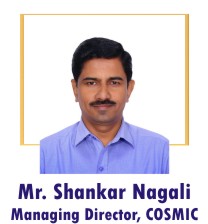 Bangalore-based Cosmic Micro Systems Pvt. Ltd.,
under the stewardship of its Managing Director Mr. Shankar Nagali, has emerged as a
trusted name in the power electronics sector. Mr. Nagali observes that the UPS-
cum-Solar industry has witnessed steady and meaningful growth, propelled by the
rising demand for uninterrupted backup solutions and the expanding acceptance of
renewable energy. He underscores that initiatives such as the Surya Ghar Yojana have
transformed solar adoption from a peripheral option into a mainstream, economically
compelling decision for households across the nation. Bangalore-based Cosmic Micro Systems Pvt. Ltd.,
under the stewardship of its Managing Director Mr. Shankar Nagali, has emerged as a
trusted name in the power electronics sector. Mr. Nagali observes that the UPS-
cum-Solar industry has witnessed steady and meaningful growth, propelled by the
rising demand for uninterrupted backup solutions and the expanding acceptance of
renewable energy. He underscores that initiatives such as the Surya Ghar Yojana have
transformed solar adoption from a peripheral option into a mainstream, economically
compelling decision for households across the nation.
With subsidies, advancements in storage, and the accelerated transition from lead-
acid to lithium batteries, rooftop solar solutions are now penetrating deep into semi-
urban and rural India. He foresees the sector achieving double-digit annual growth,
positioning indigenous manufacturers as key contributors to India’s sustainable
future.
Reflecting on the celebration of two decades of UPS-cum-Solar Day and the 33rd
edition of the Softdisk Awards, Mr. Nagali describes them as industry-defining
milestones that symbolize resilience, innovation, and continuity. He commends Dr. Sai
Krishnan for his unwavering vision and pioneering efforts, crediting him with
transforming Softdisk into a benchmark of credibility. According to him, Softdisk has
not merely chronicled the industry’s journey but has elevated it fostering
excellence, transparency, and collaboration across the sector.
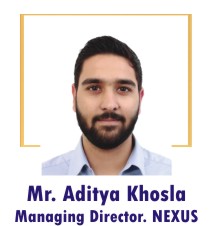 According to Mr. Aditya Khosla, Managing Director of
Nexus Power Systems, New Delhi, the UPS-cum-Solar industry has undergone a
remarkable transformation in the last decade. What once catered primarily to IT
loads in educational institutions and offices has now expanded to power critical
applications across manufacturing units, healthcare facilities, and new-age industries
that did not even exist a few years ago. He laments that the demand for uninterrupted,
regulated power is no longer a luxury but a necessity, as industries today are equipped
with high-precision, high-speed machines that demand stable power to deliver optimal
results. He adds that the government’s Make in India initiative has been a
catalyst, encouraging industrial expansion and modernization, though gaps remain in
infrastructure and support systems. Yet, this growth has also exposed certain
weaknesses. The industry’s heavy dependence on imports from China continues
to be a stumbling block, with many so-called manufacturers operating merely as
importers of packaged systems. This reliance has created vulnerabilities in cost
structures and supply chains, while price wars, false commitments, and overpromising
continue to tarnish credibility. Mr. Khosla stresses the urgent need for India to build its
own manufacturing ecosystem for key components such as semiconductors and to
invest in upskilling manpower to match global benchmarks. He is optimistic about the
industry’s evolution, foreseeing a large-scale shift from conventional SMF
batteries to Lithium-ion solutions and a surge in demand for online UPS systems. For
Nexus, the path forward lies in focusing on the right clientele and offering consistent,
reliable service values that have underpinned its growth and reputation. Looking ahead,
he foresees the industry maintaining a healthy growth rate of around 10–11%
annually, with solar adoption gaining further momentum as awareness and affordability
improve. According to Mr. Aditya Khosla, Managing Director of
Nexus Power Systems, New Delhi, the UPS-cum-Solar industry has undergone a
remarkable transformation in the last decade. What once catered primarily to IT
loads in educational institutions and offices has now expanded to power critical
applications across manufacturing units, healthcare facilities, and new-age industries
that did not even exist a few years ago. He laments that the demand for uninterrupted,
regulated power is no longer a luxury but a necessity, as industries today are equipped
with high-precision, high-speed machines that demand stable power to deliver optimal
results. He adds that the government’s Make in India initiative has been a
catalyst, encouraging industrial expansion and modernization, though gaps remain in
infrastructure and support systems. Yet, this growth has also exposed certain
weaknesses. The industry’s heavy dependence on imports from China continues
to be a stumbling block, with many so-called manufacturers operating merely as
importers of packaged systems. This reliance has created vulnerabilities in cost
structures and supply chains, while price wars, false commitments, and overpromising
continue to tarnish credibility. Mr. Khosla stresses the urgent need for India to build its
own manufacturing ecosystem for key components such as semiconductors and to
invest in upskilling manpower to match global benchmarks. He is optimistic about the
industry’s evolution, foreseeing a large-scale shift from conventional SMF
batteries to Lithium-ion solutions and a surge in demand for online UPS systems. For
Nexus, the path forward lies in focusing on the right clientele and offering consistent,
reliable service values that have underpinned its growth and reputation. Looking ahead,
he foresees the industry maintaining a healthy growth rate of around 10–11%
annually, with solar adoption gaining further momentum as awareness and affordability
improve.
Reflecting on the celebration of two decades of UPS-cum-Solar Day, Mr. Khosla
calls it an exhilarating milestone, one that validates the resilience and perseverance of
companies that have survived and thrived in India’s demanding market. To him,
this milestone is a reminder that good, honest work endures the test of time, even in
an industry often disrupted by competition and rapid technological change. He
commends Dr. Sai Krishnan’s unwavering passion, meticulous planning, and
ability to make this event uninterruptedly successful year after year, describing Softdisk
as the very glue that binds the UPS-cum-Solar fraternity together.
He further emphasizes that Softdisk’s annual rankings and awards have
been instrumental in professionalizing the industry by offering a transparent
benchmarking system. For customers, these rankings serve as a trusted reference point
when making decisions, while for companies, they create healthy competition and act
as a badge of credibility. Nexus has proudly highlighted its SD awards in all its digital
media, knowing well that these recognitions hold weight in the customer’s mind.
According to him, the consistency of these recognitions for 33 straight years has not
only built trust but also contributed to the steady growth, credibility, and evolution of
the UPS-cum-Solar sector as a whole.
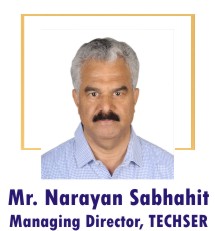 According to Mr. Narayan Sabhahit Managing Director, Techser
Power Solutions Pvt. Ltd. India is on the verge of significant Energy evolution,
with market valuations projected to touch USD 290 million by 2025, according to a
leading market research agency. Concurrently, India’s renewable energy
capacity has witnessed an extraordinary surge, expanding nearly threefold from 76.37
GW in March 2014 to an impressive 226.79 GW by June 2025. According to Mr. Narayan Sabhahit Managing Director, Techser
Power Solutions Pvt. Ltd. India is on the verge of significant Energy evolution,
with market valuations projected to touch USD 290 million by 2025, according to a
leading market research agency. Concurrently, India’s renewable energy
capacity has witnessed an extraordinary surge, expanding nearly threefold from 76.37
GW in March 2014 to an impressive 226.79 GW by June 2025.
The trajectory of this growth is undergirded by multiple forces: the persistence of
power unreliability in Tier II and Tier III cities; burgeoning requirements of IT and
telecom sectors; deepening industrialization; and an exponential dependence on data
centres and digital infrastructure. Reinforcing this progression are proactive
governmental measures, such as the Data Centre Policy, alongside a steady influx of
investments from global conglomerates.
Yet, the market is not devoid of impediments. Elevated upfront capital expenditure
and the circumscribed lifespan of batteries continue to act as growth restraints.
However, these challenges coexist with compelling opportunities: the advent of
intelligent UPS systems, seamless integration of renewable energy sources, and the
adoption of high-efficiency, modular, and scalable architectures features now
particularly sought after in metropolitan and edge data centres. The sector is forecasted
to expand at a steady CAGR of 4–5% until 2033.
Looking ahead, India’s renewable energy appetite will ascend dramatically,
with the 20th Electric Power Survey (EPS) estimating peak demand to escalate to 277.2
GW by 2026–27 and a formidable 366.4 GW by 2031–32. Against this
backdrop, UPS systems will play an increasingly indispensable role as enablers of
energy reliability, sustainability, and resilience.
Reflecting on two decades of UPS-cum-Solar Day, Mr. Narayan Sabhahit observes
that the celebration is emblematic of the sector’s maturation and endurance. As
Techser Power itself traverses a distinguished 37-year journey, he perceives in Softdisk
a parallel evolution from a niche publication to an authoritative repository of
industry insights and a trusted reference point for discerning stakeholders.
On the impact of Softdisk’s annual rankings and awards, Mr. Sabhahit notes
that they have become nothing short of the Oscars of the Indian UPS-cum-Solar
industry a distinction that bestows immense pride and recognition upon
the recipients. By institutionalizing benchmarks of quality, fostering healthy
competitiveness, and reinforcing credibility, these accolades have not only honored
excellence but have also indelibly shaped the sector’s growth narrative.
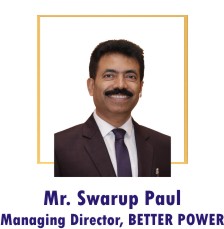 Better Power Services Pvt. Ltd., headquartered in
Guwahati and helmed by Mr. Swarup Paul, has observed the UPS-cum-Solar sector
entering an era of substantive efflorescence, propelled by concomitant imperatives of
reliability and sustainability. Mr. Paul avers that India’s burgeoning energy
appetite, coupled with episodic grid frailties in certain geographies, has rendered
integrated UPS-Solar architectures not merely desirable but de rigueur for enterprises
and households seeking uninterrupted, cost-efficient, and cleaner power. He contends
that the industry’s trajectory has been steered by a concatenation of forces:
salutary governmental incentives and policy thrusts that favor renewable adoption;
precipitous declines in the cost of photovoltaic modules and advanced storage
chemistries; an emergent corporate zeitgeist of ESG accountability; and technological
accretions such as hybrid inverters and lithium-ion integration that materially enhance
system efficacy. Notwithstanding this sanguine outlook, Mr. Paul is candid about
structural headwinds the onerous upfront capex that deters smaller consumers,
lacunae in standardized quality and after-sales networks across semi-urban and rural
precincts, and the exigent problem of battery end-of-life management which demands
systematic recycling protocols. He advocates for the proliferation of innovative financing
conduits, localized service arsenals, and intensified R&D to prolong battery
longevity and attenuate lifecycle costs. Tempering exuberance with realism, he projects
a measured yet resilient compound annual growth in the vicinity of 10–11%
over the near term, a cadence that will allow consolidation of gains while enabling
deeper penetration into Tier-II and Tier-III markets as hybrid solutions become
progressively mainstream and indispensable to India’s self-reliant energy
ambitions. Better Power Services Pvt. Ltd., headquartered in
Guwahati and helmed by Mr. Swarup Paul, has observed the UPS-cum-Solar sector
entering an era of substantive efflorescence, propelled by concomitant imperatives of
reliability and sustainability. Mr. Paul avers that India’s burgeoning energy
appetite, coupled with episodic grid frailties in certain geographies, has rendered
integrated UPS-Solar architectures not merely desirable but de rigueur for enterprises
and households seeking uninterrupted, cost-efficient, and cleaner power. He contends
that the industry’s trajectory has been steered by a concatenation of forces:
salutary governmental incentives and policy thrusts that favor renewable adoption;
precipitous declines in the cost of photovoltaic modules and advanced storage
chemistries; an emergent corporate zeitgeist of ESG accountability; and technological
accretions such as hybrid inverters and lithium-ion integration that materially enhance
system efficacy. Notwithstanding this sanguine outlook, Mr. Paul is candid about
structural headwinds the onerous upfront capex that deters smaller consumers,
lacunae in standardized quality and after-sales networks across semi-urban and rural
precincts, and the exigent problem of battery end-of-life management which demands
systematic recycling protocols. He advocates for the proliferation of innovative financing
conduits, localized service arsenals, and intensified R&D to prolong battery
longevity and attenuate lifecycle costs. Tempering exuberance with realism, he projects
a measured yet resilient compound annual growth in the vicinity of 10–11%
over the near term, a cadence that will allow consolidation of gains while enabling
deeper penetration into Tier-II and Tier-III markets as hybrid solutions become
progressively mainstream and indispensable to India’s self-reliant energy
ambitions.
On the occasion of two decades of UPS-cum-Solar Day and the thirty-third iteration
of the SD Awards, Mr. Paul extols the salutary role of Softdisk in catalyzing industry
cohesion and credibility. He regards these commemorations as more than ceremonial
markers; they are archival milestones that chronicle the sector’s metamorphosis
from a backup-centric utility to an integral pillar of India’s sustainable
infrastructure. Softdisk, he observes, has functioned as the indispensable
adhesive a veritable glue that binds manufacturers, practitioners,
policymakers and customers by benchmarking excellence, disseminating erudite market
analysis, and creating platforms for peer learning and accountability. He singles out the
painstaking stewardship and perspicacity of Dr. Sai Krishnan, whose indefatigable
commitment has rendered the annual UPS-cum-Solar Day and SD Awards enduring
institutions. For Better Power, the recognition conferred by these observances not only
amplifies market confidence but also underwrites the company’s resolve to
innovate, scale indigenous manufacturing and further the Atma Nirbhar Bharat credo.
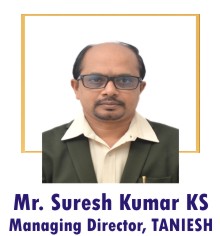 According to Mr. Suresh Kumar K S, CEO of
Bangalore-based Taniesh Technologies, the UPS-cum-Solar segment has transformed
from a niche backup solution into a mainstream power alternative over the last five
years. With industries, institutions, and even households seeking resilience,
sustainability, and lower grid dependency, hybrid systems are now driving double-digit
market growth, expected to sustain at 10–15% annually. According to Mr. Suresh Kumar K S, CEO of
Bangalore-based Taniesh Technologies, the UPS-cum-Solar segment has transformed
from a niche backup solution into a mainstream power alternative over the last five
years. With industries, institutions, and even households seeking resilience,
sustainability, and lower grid dependency, hybrid systems are now driving double-digit
market growth, expected to sustain at 10–15% annually.
Government incentives, falling solar costs, and rising demand for uninterrupted
uptime in IT, healthcare, education, and manufacturing have fueled this momentum.
Rapid advances in lithium-ion batteries, modular UPS architectures, and IoT-enabled
monitoring are further enhancing reliability, efficiency, and customer trust. Data
centers, hospitals, and smart campuses are emerging as institutional growth drivers,
while residential adoption is gaining traction as financing becomes more flexible.
Challenges remain particularly high upfront investment, limited service networks in
Tier-2 and Tier-3 cities, and the need for stronger standardization. Mr. Suresh
emphasizes that financing innovations, better lifecycle management, and faster
adoption of next-gen battery technologies will be pivotal in scaling hybrid adoption. At
Taniesh Technologies, the focus is on reducing lifecycle costs, improving serviceability,
and offering flexible deployment models. As the company celebrates two decades of
UPS-cum-Solar Day, Mr. Kumar reflects on the journey from UPS as a backup tool and
solar in its infancy, to their convergence today as indispensable, sustainable, and
future-ready power solutions.
“In the end, it is not just about power backup,” he notes, “but
about shaping a sustainable energy ecosystem.”
He also acknowledges Softdisk`s role as the industry`s binding force, whose
rankings and awards have created benchmarks, credibility, and motivation for
continuous innovation.
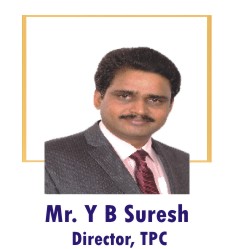 Headquartered in Bangalore, under the leadership of
Mr. Y B Suresh, Total Power Conditioners Pvt. Ltd. is witnessing the convergence of two
powerful growth engines India`s booming solar industry and the rising demand for UPS
systems. Significant cost reductions in solar plant installations, combined with
progressive government incentives, are fueling adoption, while industrial expansion
continues to drive the UPS sector. Together, they are shaping a strong ecosystem for
sustainable and reliable power solutions. Headquartered in Bangalore, under the leadership of
Mr. Y B Suresh, Total Power Conditioners Pvt. Ltd. is witnessing the convergence of two
powerful growth engines India`s booming solar industry and the rising demand for UPS
systems. Significant cost reductions in solar plant installations, combined with
progressive government incentives, are fueling adoption, while industrial expansion
continues to drive the UPS sector. Together, they are shaping a strong ecosystem for
sustainable and reliable power solutions.
India is fast emerging as a global supplier of industrial and defence technologies,
supported by robust infrastructure investments and rising domestic consumption. This
environment creates immense opportunities for UPS and solar players to innovate and
compete on a global scale. However, challenges persist. The sector still relies heavily on
imported products and raw materials solar cells, controllers, switching devices, copper,
and lead despite ongoing efforts to scale up local manufacturing. To reduce dependency
and strengthen domestic SMEs, greater investment in R&D, advanced
manufacturing technologies, and infrastructure is essential. By fostering innovation,
India can not only achieve self-reliance but also establish itself as a major exporter in
the global clean energy and UPS markets.
Government initiatives such as lower GST slabs and continued support for
industrial growth are expected to sustain momentum in both the short and long term,
reinforcing confidence across sectors.
Platforms like UPS-cum-Solar Day further energize the industry by bringing
stakeholders together, driving collaboration, and inspiring shared progress. Softdisk`s
recognition and awards continue to play a vital role in motivating excellence, building
trust, and fostering unity across the industry.
 According to Mr. R.K. Bansal, Managing Director of
Uniline Energy Systems, the company is moving towards stability and scaling . we
believe the over all industry growth to be around 10% to 11% for FY 2024-25, it will be
out with Softdisk coming out with its survey. We anticipate a strong growth
trajectory in the energy systems sector, telecom , fuelled by technological
advancements and a heightened focus on infrastructure development. Uniline Energy is
strategically positioned to capitalize on this growth by leveraging its expertise in
providing efficient power solutions. In 25-26 we expect growth not less than 50 percent
. Our goal is to make a significant contribution to the industry`s expansion while
upholding the highest standards of quality and innovation. According to Mr. R.K. Bansal, Managing Director of
Uniline Energy Systems, the company is moving towards stability and scaling . we
believe the over all industry growth to be around 10% to 11% for FY 2024-25, it will be
out with Softdisk coming out with its survey. We anticipate a strong growth
trajectory in the energy systems sector, telecom , fuelled by technological
advancements and a heightened focus on infrastructure development. Uniline Energy is
strategically positioned to capitalize on this growth by leveraging its expertise in
providing efficient power solutions. In 25-26 we expect growth not less than 50 percent
. Our goal is to make a significant contribution to the industry`s expansion while
upholding the highest standards of quality and innovation.
The emphasis on three-phase online UPS systems and the "Atma Nirbhar Bharat"
initiative is indeed promising. The `Make in India` initiative, along with the Production-
Linked Incentive (PLI) support for deserving se
|